Economy vs Premium Economy vs Business Class: Choosing the Right Cabin for Your Flight

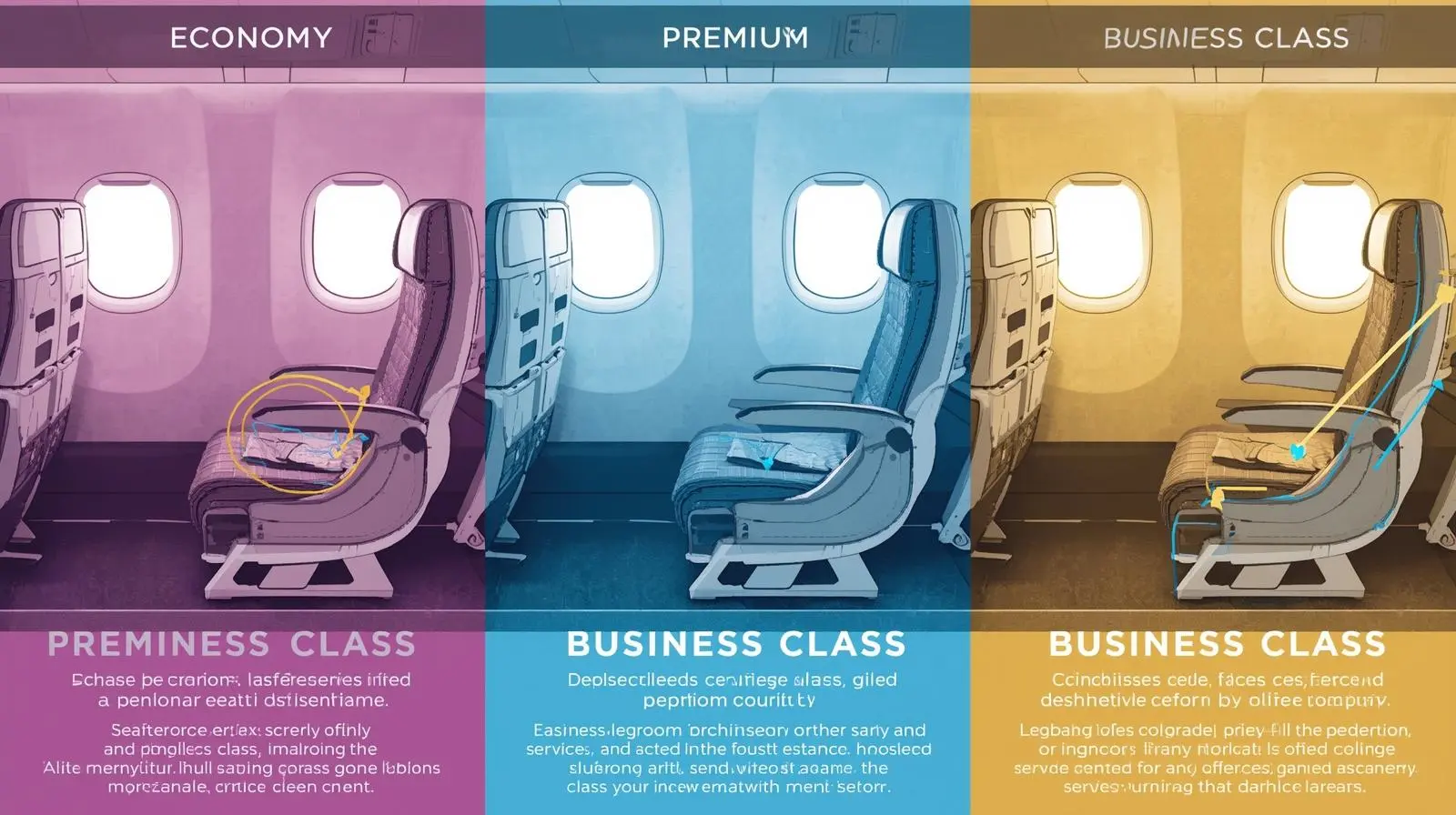
Economy vs Premium Economy vs Business Class: Choosing the Right Cabin for Your Flight
When booking a flight, understanding the differences between Economy, Premium Economy, and Business Class is crucial. Each cabin class offers distinct levels of comfort, service, and value. For frequent travelers, aviation enthusiasts, and travel planners, selecting the right class can enhance the overall flying experience while balancing cost and convenience.
Economy Class: The Standard Travel Option
Economy Class is the most common and budget-friendly cabin option. Seats typically recline minimally and provide standard legroom. Passengers receive basic in-flight meals, entertainment, and limited baggage allowances.
Example: On a 10-hour international flight from New York to London, an Economy Class passenger may experience standard meal service and a seat with around 31 inches of pitch.
- Pros: Affordable, widely available, suitable for short trips
- Cons: Limited comfort, minimal privacy, smaller seats
Premium Economy: Enhanced Comfort Without the Business Class Price
Premium Economy bridges the gap between Economy and Business Class. It offers wider seats, greater legroom, priority boarding, and upgraded meals. Some airlines also provide enhanced entertainment options and amenity kits.
Real-world scenario: A traveler flying from Los Angeles to Tokyo in Premium Economy benefits from a 38-inch seat pitch, additional recline, and better meal service, arriving more rested than in standard Economy.
Business Class: Maximum Comfort and Service for Long-Haul Flights
Business Class offers lie-flat seats, private suites on some airlines, gourmet dining, lounge access, and priority check-in. This cabin is ideal for long-haul flights where rest and productivity are essential.
Example: A flight from Dubai to New York in Business Class allows the passenger to work comfortably, sleep in a fully flat bed, and enjoy personalized service, minimizing jet lag and travel fatigue.
Cabin Class Comparison Table
| Feature | Economy | Premium Economy | Business Class |
|---|---|---|---|
| Seat Type | Standard recline | Wider, more legroom | Lie-flat / private suite |
| Meal Service | Basic meal and beverage | Enhanced menu, better drinks | Gourmet multi-course meals with fine wine |
| Baggage Allowance | 1–2 bags, 23 kg each | 2–3 bags, 23–32 kg each | 2–3 bags, 32 kg each, plus carry-on priority |
| Entertainment | Basic screen, limited content | Upgraded screen, more content | Large screen, noise-canceling headphones, premium content |
| Additional Benefits | Minimal | Priority boarding, amenity kit | Lounges, priority services, amenity kit, Wi-Fi |
Low-Cost vs Full-Service Airlines
Choosing between low-cost and full-service carriers affects cabin comfort and ancillary services. Low-cost airlines often provide limited Premium Economy or Business Class experiences, whereas full-service airlines offer comprehensive service with lie-flat seats, gourmet meals, and better baggage allowances.
Travelers should consider airline reputation, fleet age, and punctuality when selecting long-haul carriers. Resources like AirlineRatings.com provide safety and performance ratings.
International vs Regional Flights
Long-haul international flights benefit most from Premium Economy or Business Class due to extended duration and need for rest. Short-haul regional flights may not justify the additional cost, as the time spent in premium cabins is limited.
Practical Tips for Choosing the Right Cabin
- Evaluate flight duration and personal comfort needs.
- Consider total travel value, including meals, baggage, and lounge access.
- Check airline reviews and seating layouts for your route.
- Use comparison tools and resources like SeatGuru to select optimal seats.
Cost Management and Travel Planning
While Premium Economy and Business Class are more expensive, strategic booking and loyalty programs can reduce costs. For example, using frequent flyer points or booking early can secure significant savings. Travelers should balance comfort, productivity, and price to optimize long-haul flights.
Conclusion
Understanding Economy vs Premium Economy vs Business Class is essential for informed travel decisions. By evaluating seat comfort, services, airline quality, and travel duration, passengers can choose the cabin that best meets their needs. Full-service airlines often provide superior experiences, while Premium Economy offers an affordable upgrade over Economy for longer flights. With proper planning and comparison, travelers can enjoy both comfort and value on every journey.
